
A clearer path to BACnet.
RELEASE · v0.11.0
Start with a released tool.
Install a release binary or package, run the preserved local lab, then read a known device.
Install v0.11CURRENT DEVELOPMENT · SOURCE BUILD
Build with the current APIs.
Compose shared endpoints, configure SC, and understand Network Port registration, passive Number controls and transport evidence.
Open development guidesRELEASE TUTORIALS · START WITH YOUR TASK
Choose the tool that fits your task.
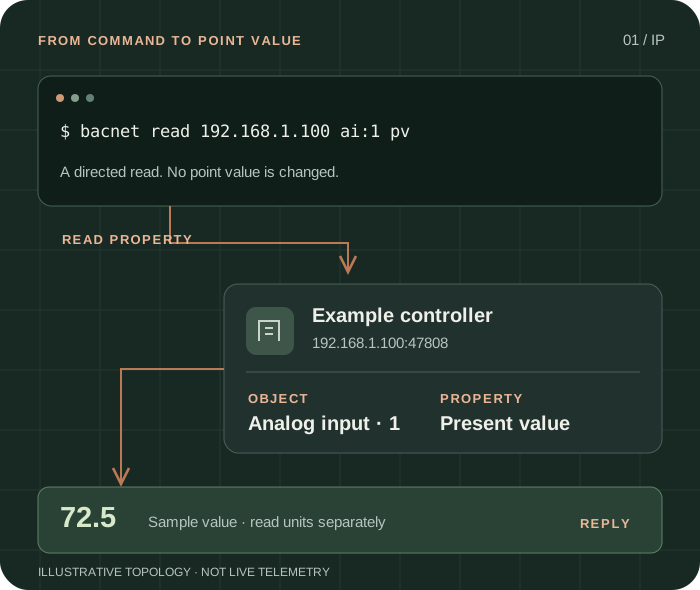
Start at the terminal.
Install the tool, identify a known device, and read a property without writing an application.
Read your first point PYTHON · AUTOMATEMake a small script.
Use async bindings and typed values to turn a property read into a repeatable integration.
Start with Python RUST · EMBEDBuild it into your system.
Add the client and supporting crates to your application, then choose the transport you need.
Start with RustUNDERSTAND THE CONNECTION
Configuration belongs
beside the command.
Local interface or remote target? Broadcast or directed request? Start with the network shape, then use the right options for your interface.
Open the configuration guideWHEN SOMETHING DOES NOT CONNECT
Find the next useful check.
Work from the symptom: no discovery replies, a timeout, an unknown property, or a certificate failure.
TroubleshootingKNOW THE BOUNDARIES
Evidence, not blanket claims.
Understand the release, interface, transport, and conformance scope before planning a deployment.
Support and limitationsRusty BACnet is an MIT-licensed protocol stack. Neither release nor development guidance makes a BTL certification or full BACnet conformance claim. Work only on networks you are authorized to access.
Release v0.11.0 ·Current development. Follow the scope named on each page. Pre-1.0 APIs; partial conformance.Support & limitations