CHW-0002 — CHWST reset not functioning
| Status | verified — engine e2ff2f8, cxf:fnv1a128:352546be4d185d46c2132a8845134625, 2026-08-17 |
| Severity | 3 |
| Method | statistical |
| Phase | 2 |
| Category | EXCESS_CONSUMPTION |
| Confidence | HIGH |
| Estimation | PROXY_ESTIMATION |
| G36 | — |
| Clusters | — |
| Suppresses | — |
| Suppressed by | — |
| Related | CHW-0003, CHW-0007, AHU-0023, AHU-0024 |
| Playbooks | missing-reset |
| Source | HVAC FDD Reference v1.0 ch.13, CHW-0002 (pdf pp. 119-121); PNNL RetuningOpps C01; PNNL-25985 EEM-11 |
| Operating states | Chiller plant enabled and producing chilled water for the bulk of the evaluation window |
Preconditions (host-enforced): chwst_sp and chiller_load must belong to the same plant: bind the setpoint the chillers actually track (the plant controller’s active CHWST setpoint, not a schedule table entry) and a load signal from the same loop. On a multi-chiller plant, bind the lead chiller or a plant-level load — a lagging machine’s own load percentage is pinned by staging, not by the building, and reads flat while the plant swings. The plant must be running for most of the window: a chiller off for days holds both signals still, and only yLoadVaried stands between that and a false alarm. Evaluability is signalled in-rule by yLoadVaried: when it is false the verdict is NO_EVAL, not healthy. The host must also confirm the setpoint point is not simply unwritten — a BAS that trends the reset output only while the reset is enabled will show a flat last-known value that no plant is following.
Points: chwst_sp, chiller_load
Outputs:
yFault— True while the CHWST setpoint has stayed flat over the evaluation window despite sufficient chiller-load variation, for at least alarm_delayyLoadVaried— Evaluability signal — true when chiller load has varied enough within the evaluation window for a flat setpoint to mean anything; false means NO_EVAL and the host must ignore yFault
Parameters:
| Name | Default | Unit | CXF path | Description |
|---|---|---|---|---|
evaluation_window | 604800.0 | s | spRef.samplePeriod, loadRef.samplePeriod, spFlatHeld.delayTime, loadFlatHeld.delayTime | Window over which setpoint flatness and load variation are assessed (7 days); drives both baseline sample periods and both dwell timers |
sp_flat_tolerance | 0.75 | °C | spFlat.t | Max deviation of chwst_sp from its sampled baseline to count as flat (half the reference’s 1.5 °C min_expected_sp_range) |
load_variation_tolerance | 10.0 | % | loadFlat.t | Max deviation of chiller_load from its sampled baseline to still count as flat (half the adopted 20 % min_load_range; the reference names min_load_range in the logic but ships no default — see Deviations) |
alarm_delay | 86400.0 | s | persist.delayTime | Fault persistence before alarm (24 h) |
Description
The chilled water supply temperature setpoint sits at one value week after week while the plant’s load moves underneath it. A working CHWST reset raises the setpoint as cooling demand falls, and a chiller making 8 °C water instead of 6 °C does the same job for 4–6% less power, because the compressor lifts against a smaller temperature difference. PNNL’s 151-building study found this in more than 30% of buildings — the plant-side half of the story AHU-0023 and AHU-0024 tell about air handlers, and the fix is desk work.
What the rule cannot do is distinguish a plant that will not reset from one that
has nothing to reset against. A hospital chiller pinned at full load all week has
a defensible reason to hold its setpoint, so the load signal must move before a
flat setpoint is evidence — that is yLoadVaried, and why the host reads it
first.
Detection Logic
baseline(x)  = x sampled and held every evaluation_window (7 days)
sp_flat      = |chwst_sp − baseline(chwst_sp)| < sp_flat_tolerance,
               continuously for evaluation_window
load_flat    = |chiller_load − baseline(chiller_load)| < load_variation_tolerance,
               continuously for evaluation_window

yLoadVaried  = NOT load_flat      (false ⇒ host reports NO_EVAL)
yFault       = sp_flat AND yLoadVaried, sustained for alarm_delay
Block graph (rule.cxf.jsonld):
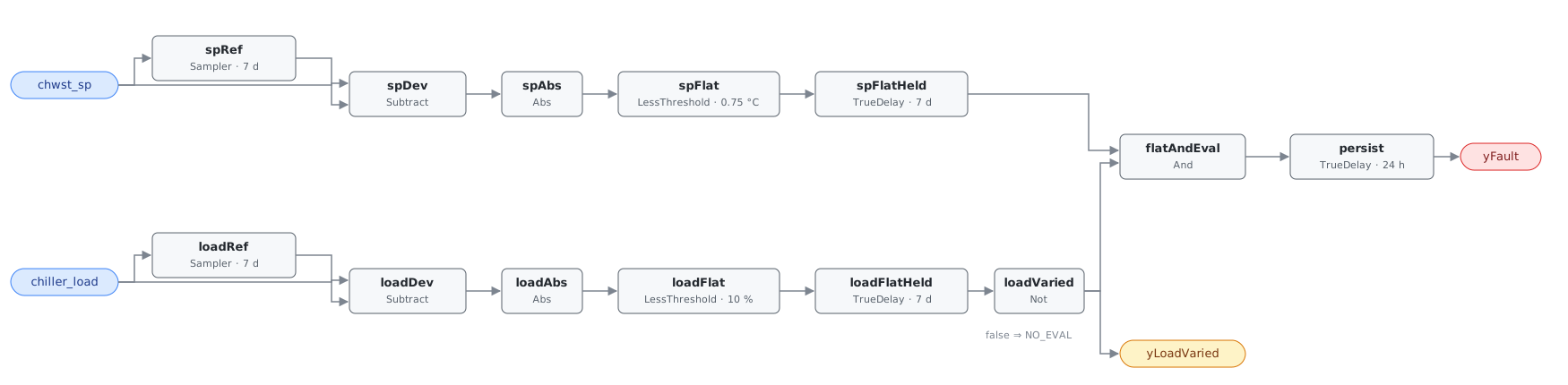
This is AHU-0023’s detector with the plant’s points bound to it. Two symmetric
chains compare each signal against a weekly Discrete.Sampler baseline, which
emits the live input on its first tick, so there is no startup artifact.
spFlatHeld asserts only after the setpoint has stayed within tolerance
continuously for a full window, and any reset activity of 0.75 °C or more
restarts it. loadFlatHeld does the same for load, and its negation is
yLoadVaried — “not varied” means a full window of continuous flatness, so the
signal is optimistically true during the first window after startup, which is
harmless because yFault needs that same window.
Both dwell timers fire on the same tick when the plant is flat in both signals,
so the fault conjunction is false by construction on that tick and there is no
boundary race. persist (24 h) filters the remainder and every TrueDelay
carries delayOnInit = true. Worst-case time to alarm from cold start is
evaluation_window + alarm_delay — 8 days. Comparisons are strict, so a signal
sitting exactly on a tolerance falls on the not-flat side.
Possible Diagnoses
- CHWST reset never programmed
- CHWST reset disabled by operator
- Reset overridden to fixed value
- Valve request signals not reaching the plant controller
Energy Impact
EXCESS_CONSUMPTION, HIGH confidence, PROXY_ESTIMATION (EEM-11, PNNL-25985).
Raising CHWST by 1 °C typically improves chiller efficiency by 2–3%; the
whole-site figure is 0.5–2%, cooling-dominant. Prevalence is above 30% of
buildings (PNNL 151-building study). The savings are pure sequence work, but
they are capped by the coils — raise CHWST past what they can still dehumidify
with and the plant trades chiller kW for humidity complaints, which is why the
reference’s estimate is parameterised on a potential_chwst_increase the host
supplies rather than on the fault alone.
Emissions Impact
Scope 2, PROXY_EMISSIONS, HIGH confidence; typical 500–5,000 kg CO₂e/yr for a suboptimal reset strategy. Avoided-emissions basis: MOER (marginal).
Deviations
- Windowed range → deviation from a weekly sampled baseline. The reference
computes
max(CHWST_SP) − min(CHWST_SP)over the window; CDL’s elementary library has no windowed min/max, so both chains compare against aDiscrete.Samplerhold with tolerances at half the reference ranges. Detection is equivalent for signals that move and return, and slightly conservative for monotonic drift inside one window: a setpoint ramping by 1.4 °C across the week clears the dwell where a range test would still call it flat. AHU-0023 is the precedent and the mechanism is copied unchanged. Reals.MovingAveragerejected, and the tick band that follows. The engine implements it with a fixed 64-checkpoint ring, so a seven-day window would needdt ≥ 9,600 sbefore it stops silently dropping its oldest samples. No BAS ticks that slowly; AHU-0023 found this and this card inherits it. The sampler-and-dwell chain has no lower bound on tick period, and its upper bound is the one to watch — a reset excursion shorter than one tick is invisible to the flatness test, so trend at 5–15 min.min_load_rangeis adopted, not transcribed. The chapter names it in the equation but its tunables line lists onlyevaluation_window,min_expected_sp_rangeandAlarmDelay, so the parameter has no published default. The shipped 20% (asload_variation_tolerance = 10 %, half-range) follows AHU-0023’smin_oat_range_for_evalin shape and intent: a low bar a real plant clears easily, not a discriminating threshold. A chiller that never swings 20 points across seven days is base-loaded — NO_EVAL is the right answer — or its load point is dead.- Strict comparisons on both tolerances.
Reals.LessThresholdisu < t, so a setpoint deviating exactly 0.75 °C clears the flatness dwell and a load deviating exactly 10% counts as varied. Equality is measure-zero in continuous data but perfectly reachable in a BAS that scales setpoints to fixed increments, so both boundaries are pinned from both sides. - NO_EVAL is surfaced as
yLoadVaried. Boolean block logic has no tri-state, so evaluability is a second boundary output the host consults before interpretingyFault— false means NO_EVAL, never healthy. Same inverted-flat semantics as AHU-0023’syOatVaried. AlarmDelay= 24 h implemented asTrueDelayon the fault conjunction; the evaluation window itself is enforced by the two flatness dwells.delayOnInit = trueon everyTrueDelay(startup conservatism per AHU-0016), so a rule loaded into an already-faulted plant still waits the full window plus delay.- Transcription gaps in the source. The chapter gives CHW-0002 no
description paragraph, no operating-states line and no test vectors, so
operating_states,preconditionsand every scenario invectors.jsonare this card’s judgement. The chapter’s heading is “Chilled water supply temperature reset not functioning”;namecarries the shorter index spelling fromfaults/chw/README.md, which owns names. - Blind spots. The rule reads the setpoint, never the water: a plant whose setpoint moves while the chillers ignore it is CHW-0001’s problem. Diagnoses 1–3 are one signature. A reset driven by something other than plant load — an OAT-scheduled CHWST reset in stable weather, or a demand-limited plant — is flat for legitimate reasons and reads as a fault whenever the load happens to move. And a plant flat in both signals because it is off is indistinguishable from a healthy idle plant; the host’s operating-state gate, not the graph, keeps that quiet.
Notes
Fix path is the missing-reset playbook: verify by plotting CHWST setpoint against plant load over the window, then program the reset in the plant controller. The playbook’s worked examples are the AHU-side pair (SAT and DSP); the plant-side procedure is the same shape one system upstream.
clusters is deliberately empty. CLU-02 (“Missing Reset Strategy”) is currently
an AHU-scoped cluster triggered by AHU-0023, and membership is
clusters/clusters.json’s to declare — faults/chw/README.md calls this pair
the CLU-02-style root cause one system further upstream. A plant failing both
CHW-0002 and CHW-0003 has one root cause, no reset strategy ever
commissioned, and should be dispatched as one visit.
Test Vectors
9 scenarios, clock step 300 s over 777600 s.
| Scenario | Description |
|---|---|
reset_working | CHWST_SP swings 2.5 degC with load; flatness dwell resets every half day, no fault |
fixed_setpoint | CHWST_SP pinned at 6.5 degC while load swings 30-80%; fault asserts at exactly evaluation_window (7 d) + alarm_delay (24 h) = 691200 s, pinned from both sides |
flat_load_no_eval | NO_EVAL: setpoint flat but load never moves; yLoadVaried drops at exactly evaluation_window and yFault never fires |
sp_at_flat_tolerance | Setpoint deviates from its baseline by exactly sp_flat_tolerance (0.75 degC): strict < makes that not flat, so no fault |
sp_within_flat_tolerance | Setpoint jitter of 0.625 degC stays inside sp_flat_tolerance, so it still counts as flat; fault at 691200 s |
load_at_variation_tolerance | Load deviates from its baseline by exactly load_variation_tolerance (10%): strict < makes that varied, so the rule stays evaluable and the flat setpoint alarms |
load_within_variation_tolerance | Load moves only 9.5% about its baseline, inside load_variation_tolerance: NO_EVAL at exactly evaluation_window, and the simultaneous setpoint-flat edge cannot race it into a fault |
sp_goes_flat_mid_run | Reset stops working 12 h into the run: dwell starts at 43200 s, so the alarm lands at exactly 43200 + 604800 + 86400 = 734400 s |
reset_resumes | Setpoint flat for 4 days, then reset activity resumes before the window completes; dwell resets and never alarms |
vectors.json
{
"schema": "cxf-library/vectors/v1",
"clock": {
"step_s": 300,
"horizon_s": 777600
},
"scenarios": [
{
"name": "reset_working",
"description": "CHWST_SP swings 2.5 degC with load; flatness dwell resets every half day, no fault",
"inputs": {
"chwst_sp": [
{
"t": 0,
"value": 6.5
},
{
"t": 43200,
"value": 9.0
},
{
"t": 86400,
"value": 6.5
},
{
"t": 129600,
"value": 9.0
},
{
"t": 172800,
"value": 6.5
},
{
"t": 216000,
"value": 9.0
},
{
"t": 259200,
"value": 6.5
},
{
"t": 302400,
"value": 9.0
},
{
"t": 345600,
"value": 6.5
},
{
"t": 388800,
"value": 9.0
},
{
"t": 432000,
"value": 6.5
},
{
"t": 475200,
"value": 9.0
},
{
"t": 518400,
"value": 6.5
},
{
"t": 561600,
"value": 9.0
},
{
"t": 604800,
"value": 6.5
},
{
"t": 648000,
"value": 9.0
},
{
"t": 691200,
"value": 6.5
},
{
"t": 734400,
"value": 9.0
},
{
"t": 777600,
"value": 6.5
}
],
"chiller_load": [
{
"t": 0,
"value": 30.0
},
{
"t": 43200,
"value": 80.0
},
{
"t": 86400,
"value": 30.0
},
{
"t": 129600,
"value": 80.0
},
{
"t": 172800,
"value": 30.0
},
{
"t": 216000,
"value": 80.0
},
{
"t": 259200,
"value": 30.0
},
{
"t": 302400,
"value": 80.0
},
{
"t": 345600,
"value": 30.0
},
{
"t": 388800,
"value": 80.0
},
{
"t": 432000,
"value": 30.0
},
{
"t": 475200,
"value": 80.0
},
{
"t": 518400,
"value": 30.0
},
{
"t": 561600,
"value": 80.0
},
{
"t": 604800,
"value": 30.0
},
{
"t": 648000,
"value": 80.0
},
{
"t": 691200,
"value": 30.0
},
{
"t": 734400,
"value": 80.0
},
{
"t": 777600,
"value": 30.0
}
]
},
"expect": [
{
"output": "yFault",
"from_s": 0,
"to_s": 777600,
"equals": false
},
{
"output": "yLoadVaried",
"from_s": 0,
"to_s": 777600,
"equals": true
}
]
},
{
"name": "fixed_setpoint",
"description": "CHWST_SP pinned at 6.5 degC while load swings 30-80%; fault asserts at exactly evaluation_window (7 d) + alarm_delay (24 h) = 691200 s, pinned from both sides",
"inputs": {
"chwst_sp": 6.5,
"chiller_load": [
{
"t": 0,
"value": 30.0
},
{
"t": 43200,
"value": 80.0
},
{
"t": 86400,
"value": 30.0
},
{
"t": 129600,
"value": 80.0
},
{
"t": 172800,
"value": 30.0
},
{
"t": 216000,
"value": 80.0
},
{
"t": 259200,
"value": 30.0
},
{
"t": 302400,
"value": 80.0
},
{
"t": 345600,
"value": 30.0
},
{
"t": 388800,
"value": 80.0
},
{
"t": 432000,
"value": 30.0
},
{
"t": 475200,
"value": 80.0
},
{
"t": 518400,
"value": 30.0
},
{
"t": 561600,
"value": 80.0
},
{
"t": 604800,
"value": 30.0
},
{
"t": 648000,
"value": 80.0
},
{
"t": 691200,
"value": 30.0
},
{
"t": 734400,
"value": 80.0
},
{
"t": 777600,
"value": 30.0
}
]
},
"expect": [
{
"output": "yFault",
"from_s": 0,
"to_s": 690900,
"equals": false
},
{
"output": "yFault",
"from_s": 691200,
"to_s": 777600,
"equals": true
},
{
"output": "yLoadVaried",
"from_s": 0,
"to_s": 777600,
"equals": true
}
]
},
{
"name": "flat_load_no_eval",
"description": "NO_EVAL: setpoint flat but load never moves; yLoadVaried drops at exactly evaluation_window and yFault never fires",
"inputs": {
"chwst_sp": 6.5,
"chiller_load": 55.0
},
"expect": [
{
"output": "yFault",
"from_s": 0,
"to_s": 777600,
"equals": false
},
{
"output": "yLoadVaried",
"from_s": 0,
"to_s": 604500,
"equals": true
},
{
"output": "yLoadVaried",
"from_s": 604800,
"to_s": 777600,
"equals": false
}
]
},
{
"name": "sp_at_flat_tolerance",
"description": "Setpoint deviates from its baseline by exactly sp_flat_tolerance (0.75 degC): strict < makes that not flat, so no fault",
"inputs": {
"chwst_sp": [
{
"t": 0,
"value": 6.5
},
{
"t": 43200,
"value": 7.25
},
{
"t": 86400,
"value": 6.5
},
{
"t": 129600,
"value": 7.25
},
{
"t": 172800,
"value": 6.5
},
{
"t": 216000,
"value": 7.25
},
{
"t": 259200,
"value": 6.5
},
{
"t": 302400,
"value": 7.25
},
{
"t": 345600,
"value": 6.5
},
{
"t": 388800,
"value": 7.25
},
{
"t": 432000,
"value": 6.5
},
{
"t": 475200,
"value": 7.25
},
{
"t": 518400,
"value": 6.5
},
{
"t": 561600,
"value": 7.25
},
{
"t": 604800,
"value": 6.5
},
{
"t": 648000,
"value": 7.25
},
{
"t": 691200,
"value": 6.5
},
{
"t": 734400,
"value": 7.25
},
{
"t": 777600,
"value": 6.5
}
],
"chiller_load": [
{
"t": 0,
"value": 30.0
},
{
"t": 43200,
"value": 80.0
},
{
"t": 86400,
"value": 30.0
},
{
"t": 129600,
"value": 80.0
},
{
"t": 172800,
"value": 30.0
},
{
"t": 216000,
"value": 80.0
},
{
"t": 259200,
"value": 30.0
},
{
"t": 302400,
"value": 80.0
},
{
"t": 345600,
"value": 30.0
},
{
"t": 388800,
"value": 80.0
},
{
"t": 432000,
"value": 30.0
},
{
"t": 475200,
"value": 80.0
},
{
"t": 518400,
"value": 30.0
},
{
"t": 561600,
"value": 80.0
},
{
"t": 604800,
"value": 30.0
},
{
"t": 648000,
"value": 80.0
},
{
"t": 691200,
"value": 30.0
},
{
"t": 734400,
"value": 80.0
},
{
"t": 777600,
"value": 30.0
}
]
},
"expect": [
{
"output": "yFault",
"from_s": 0,
"to_s": 777600,
"equals": false
},
{
"output": "yLoadVaried",
"from_s": 0,
"to_s": 777600,
"equals": true
}
]
},
{
"name": "sp_within_flat_tolerance",
"description": "Setpoint jitter of 0.625 degC stays inside sp_flat_tolerance, so it still counts as flat; fault at 691200 s",
"inputs": {
"chwst_sp": [
{
"t": 0,
"value": 6.5
},
{
"t": 43200,
"value": 7.125
},
{
"t": 86400,
"value": 6.5
},
{
"t": 129600,
"value": 7.125
},
{
"t": 172800,
"value": 6.5
},
{
"t": 216000,
"value": 7.125
},
{
"t": 259200,
"value": 6.5
},
{
"t": 302400,
"value": 7.125
},
{
"t": 345600,
"value": 6.5
},
{
"t": 388800,
"value": 7.125
},
{
"t": 432000,
"value": 6.5
},
{
"t": 475200,
"value": 7.125
},
{
"t": 518400,
"value": 6.5
},
{
"t": 561600,
"value": 7.125
},
{
"t": 604800,
"value": 6.5
},
{
"t": 648000,
"value": 7.125
},
{
"t": 691200,
"value": 6.5
},
{
"t": 734400,
"value": 7.125
},
{
"t": 777600,
"value": 6.5
}
],
"chiller_load": [
{
"t": 0,
"value": 30.0
},
{
"t": 43200,
"value": 80.0
},
{
"t": 86400,
"value": 30.0
},
{
"t": 129600,
"value": 80.0
},
{
"t": 172800,
"value": 30.0
},
{
"t": 216000,
"value": 80.0
},
{
"t": 259200,
"value": 30.0
},
{
"t": 302400,
"value": 80.0
},
{
"t": 345600,
"value": 30.0
},
{
"t": 388800,
"value": 80.0
},
{
"t": 432000,
"value": 30.0
},
{
"t": 475200,
"value": 80.0
},
{
"t": 518400,
"value": 30.0
},
{
"t": 561600,
"value": 80.0
},
{
"t": 604800,
"value": 30.0
},
{
"t": 648000,
"value": 80.0
},
{
"t": 691200,
"value": 30.0
},
{
"t": 734400,
"value": 80.0
},
{
"t": 777600,
"value": 30.0
}
]
},
"expect": [
{
"output": "yFault",
"from_s": 0,
"to_s": 690900,
"equals": false
},
{
"output": "yFault",
"from_s": 691200,
"to_s": 777600,
"equals": true
}
]
},
{
"name": "load_at_variation_tolerance",
"description": "Load deviates from its baseline by exactly load_variation_tolerance (10%): strict < makes that varied, so the rule stays evaluable and the flat setpoint alarms",
"inputs": {
"chwst_sp": 6.5,
"chiller_load": [
{
"t": 0,
"value": 50.0
},
{
"t": 43200,
"value": 60.0
},
{
"t": 86400,
"value": 50.0
},
{
"t": 129600,
"value": 60.0
},
{
"t": 172800,
"value": 50.0
},
{
"t": 216000,
"value": 60.0
},
{
"t": 259200,
"value": 50.0
},
{
"t": 302400,
"value": 60.0
},
{
"t": 345600,
"value": 50.0
},
{
"t": 388800,
"value": 60.0
},
{
"t": 432000,
"value": 50.0
},
{
"t": 475200,
"value": 60.0
},
{
"t": 518400,
"value": 50.0
},
{
"t": 561600,
"value": 60.0
},
{
"t": 604800,
"value": 50.0
},
{
"t": 648000,
"value": 60.0
},
{
"t": 691200,
"value": 50.0
},
{
"t": 734400,
"value": 60.0
},
{
"t": 777600,
"value": 50.0
}
]
},
"expect": [
{
"output": "yLoadVaried",
"from_s": 0,
"to_s": 777600,
"equals": true
},
{
"output": "yFault",
"from_s": 0,
"to_s": 690900,
"equals": false
},
{
"output": "yFault",
"from_s": 691200,
"to_s": 777600,
"equals": true
}
]
},
{
"name": "load_within_variation_tolerance",
"description": "Load moves only 9.5% about its baseline, inside load_variation_tolerance: NO_EVAL at exactly evaluation_window, and the simultaneous setpoint-flat edge cannot race it into a fault",
"inputs": {
"chwst_sp": 6.5,
"chiller_load": [
{
"t": 0,
"value": 50.0
},
{
"t": 43200,
"value": 59.5
},
{
"t": 86400,
"value": 50.0
},
{
"t": 129600,
"value": 59.5
},
{
"t": 172800,
"value": 50.0
},
{
"t": 216000,
"value": 59.5
},
{
"t": 259200,
"value": 50.0
},
{
"t": 302400,
"value": 59.5
},
{
"t": 345600,
"value": 50.0
},
{
"t": 388800,
"value": 59.5
},
{
"t": 432000,
"value": 50.0
},
{
"t": 475200,
"value": 59.5
},
{
"t": 518400,
"value": 50.0
},
{
"t": 561600,
"value": 59.5
},
{
"t": 604800,
"value": 50.0
},
{
"t": 648000,
"value": 59.5
},
{
"t": 691200,
"value": 50.0
},
{
"t": 734400,
"value": 59.5
},
{
"t": 777600,
"value": 50.0
}
]
},
"expect": [
{
"output": "yLoadVaried",
"from_s": 0,
"to_s": 604500,
"equals": true
},
{
"output": "yLoadVaried",
"from_s": 604800,
"to_s": 777600,
"equals": false
},
{
"output": "yFault",
"from_s": 0,
"to_s": 777600,
"equals": false
}
]
},
{
"name": "sp_goes_flat_mid_run",
"description": "Reset stops working 12 h into the run: dwell starts at 43200 s, so the alarm lands at exactly 43200 + 604800 + 86400 = 734400 s",
"inputs": {
"chwst_sp": [
{
"t": 0,
"value": 6.5
},
{
"t": 21600,
"value": 9.0
},
{
"t": 43200,
"value": 6.5
}
],
"chiller_load": [
{
"t": 0,
"value": 30.0
},
{
"t": 43200,
"value": 80.0
},
{
"t": 86400,
"value": 30.0
},
{
"t": 129600,
"value": 80.0
},
{
"t": 172800,
"value": 30.0
},
{
"t": 216000,
"value": 80.0
},
{
"t": 259200,
"value": 30.0
},
{
"t": 302400,
"value": 80.0
},
{
"t": 345600,
"value": 30.0
},
{
"t": 388800,
"value": 80.0
},
{
"t": 432000,
"value": 30.0
},
{
"t": 475200,
"value": 80.0
},
{
"t": 518400,
"value": 30.0
},
{
"t": 561600,
"value": 80.0
},
{
"t": 604800,
"value": 30.0
},
{
"t": 648000,
"value": 80.0
},
{
"t": 691200,
"value": 30.0
},
{
"t": 734400,
"value": 80.0
},
{
"t": 777600,
"value": 30.0
}
]
},
"expect": [
{
"output": "yFault",
"from_s": 0,
"to_s": 734100,
"equals": false
},
{
"output": "yFault",
"from_s": 734400,
"to_s": 777600,
"equals": true
},
{
"output": "yLoadVaried",
"from_s": 0,
"to_s": 777600,
"equals": true
}
]
},
{
"name": "reset_resumes",
"description": "Setpoint flat for 4 days, then reset activity resumes before the window completes; dwell resets and never alarms",
"inputs": {
"chwst_sp": [
{
"t": 0,
"value": 6.5
},
{
"t": 345600,
"value": 9.0
},
{
"t": 388800,
"value": 6.5
},
{
"t": 432000,
"value": 9.0
},
{
"t": 475200,
"value": 6.5
},
{
"t": 518400,
"value": 9.0
},
{
"t": 561600,
"value": 6.5
},
{
"t": 604800,
"value": 9.0
},
{
"t": 648000,
"value": 6.5
},
{
"t": 691200,
"value": 9.0
},
{
"t": 734400,
"value": 6.5
},
{
"t": 777600,
"value": 9.0
}
],
"chiller_load": [
{
"t": 0,
"value": 30.0
},
{
"t": 43200,
"value": 80.0
},
{
"t": 86400,
"value": 30.0
},
{
"t": 129600,
"value": 80.0
},
{
"t": 172800,
"value": 30.0
},
{
"t": 216000,
"value": 80.0
},
{
"t": 259200,
"value": 30.0
},
{
"t": 302400,
"value": 80.0
},
{
"t": 345600,
"value": 30.0
},
{
"t": 388800,
"value": 80.0
},
{
"t": 432000,
"value": 30.0
},
{
"t": 475200,
"value": 80.0
},
{
"t": 518400,
"value": 30.0
},
{
"t": 561600,
"value": 80.0
},
{
"t": 604800,
"value": 30.0
},
{
"t": 648000,
"value": 80.0
},
{
"t": 691200,
"value": 30.0
},
{
"t": 734400,
"value": 80.0
},
{
"t": 777600,
"value": 30.0
}
]
},
"expect": [
{
"output": "yFault",
"from_s": 0,
"to_s": 777600,
"equals": false
}
]
}
]
}